Section Two: Time
Day 5 Make Your Time Map
Day 6 Goals? Who Me?
Day 7 Assign Your Activities
Section Three: Workspace
Day 8 Your Writespace
Day 9 What's in Those File Drawers?
Section Four: Online Workspace
Day 10 Your Most Time-Saving Tool
Day 11 Communicate on the Web
Day 12 Writer on the Web
Day 13 Books and Magazines, EVERYWHERE
Day 14 Find Your Favorites
Section Five: Idea to Query
Day 15 Capture Those Ideas
Day 16 Research and Clippings
Day 17 Target Your Market
Day 18 A Guideline Database Just for You
Day 19 Writer's Clips
Day 20 Quick Queries
Day 21 Email Queries
Day 22 Track Your Submissions
Section Six: Manuscript to Payment
Day 23 The Perfect Manuscript
Day 24 Show Me the Money
Day 25 Taxes Made Easy
Day 26 More Taxes?!? Self-Employment and Estimated Taxes
Section Seven: What Else?
Day 27 Update Your Skills
Day 28 Make Your Household Hum
Section Eight: Go Forward...Organized!
Day 29 Rework Your Time
Day 30 What's Next?
Peek
inside the eBook
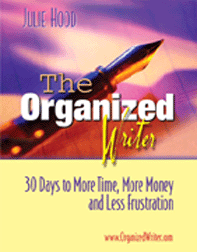
The Organized Writer:
30 Days to More Time, More Money, and Less Frustration
"If only I were more organized...."
What would you do? Write more?
Publish more? Probably.
But who has the time to get organized?
You do. Spend a little investment time
each day for the next 30 days, and:
Learn the one secret tool
every writer needs to stay organized.
Find out the most precious
resource of any writer–and how you can maximize it.
Get 30 printable Forms and
Checklists to track your ideas, your queries, your
markets, and your manuscripts.
Determine your
"organizing personality" and use it to stay
organized.
Learn how to file your
papers (and actually find them back).
Learn tricks to make your
computer do your work and save you time.
1.
Work with Yourself, Not Against Yourself Understand
your personality and what works for you. Do what feels
right and what appeals to you—not what seems to “be
organized.”
2. Focus and Pay Attention When possible, do one thing at a time. Do not
let your mind wander. Picture the goal in your
mind, and focus on it.
3. Invest Your Time Pay attention to how you spend your time. Saving just 20
minutes each day gives you an extra 120 hours each year.
Strive to improve the time it takes to complete a project.
Be willing to invest a block of time if it will save you hours
of frustration later.
4.
Create Habits You can create a new habit (or lose a bad habit!) in 21
days.
For only three weeks of effort, you can create a lifetime
of
good habits.
5.
Use the Right Tools Make sure you have the right tools handy when you need
them.
6.
Work Forward Organize for your work ahead. Don't organize what's
already finished. You want to save time by going forward not
just reorganize what you already have.
"The
Organized Writer is a must for writers finding
themselves buried in piles of paper. Hood has broken
down the steps of organization in an easy to understand
format just for us."
-- Diana
Brandmeyer, author of Inspiration romance and
children's books
****
"Julie Hood's
excellent e-book, The Organized Writer, can help
you achieve the organization you need to be more
productive as a writer...
If you
really want to organize your writing life (and maybe the
rest of your life, too) this practical and positive e-book
is a must-have!"
-Reviewed by Sherry Ramsey, TheScriptorium.net